As of late February 2026, the GKCDA has officially shifted from the planning phase to “Full Implementation Mode.” Special Administrative Officer Datuk Ik Pahon Joyik recently confirmed that while the agency aims for an 80% completion rate for most projects by the end of 2026, roughly 60% of the major multi-million ringgit works are on track to meet that deadline. The smaller community projects (worth a few hundred thousand ringgit) are largely 100% completed.
Here is the updated status for the Bau district:
## 1. Completed Projects (As of Feb 2026)
These projects have been officially handed over or have finished physical construction:
- Jalan Jambusan to Bau Bidayuh Cultural Centre: A 510m road upgrade (RM247k) was officially handed over on January 30, 2026.
- Bau Hospital Parking: A new 60-bay parking facility (RM199k) is now open to the public.
- Opar Water Supply (Phase 1): Over 20 villages in Opar have now received completed gravity feed water systems (part of a RM14.4 million allocation).
- Minor Village Works: Most “Phase 1” projects involving village streetlights, small drainage repairs, and minor community hall upgrades are reported as finished across Tasik Biru and Serembu.
## 2. Ongoing Projects (Active Construction)
These are currently “on the ground” with active machinery:
- Dewan Suarah Bau (Phase 2): Construction for the lifts and escalators (RM2.7 million) began in December 2025 and is set for December 2026 completion.
- Bau-Lundu Dual Carriageway (Phase 1): The RM74 million upgrade from the Bau-Lundu junction to Bau Town is on schedule for June 2026 completion.
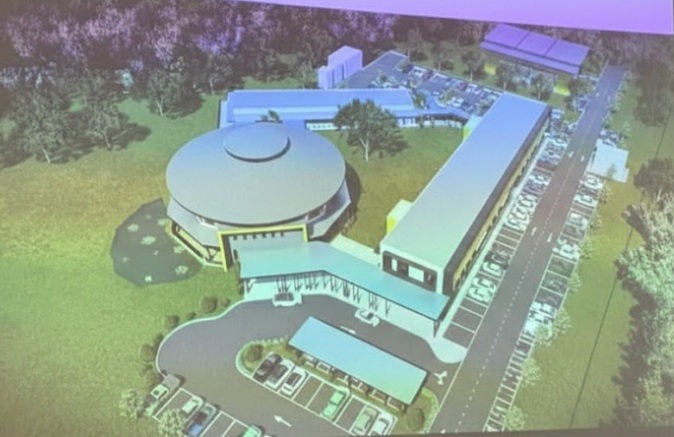
- Bau District Education Office (PPD): This RM22.65 million complex is in early-stage construction with a target of February 2028.
- Musi-Buso Road & Bridge: The RM73 million project (including the concrete bridge) is active and aimed at reducing flood risks for the area.
- Serembu Cattle Farm (Kpg Seromah): Physical work has started on this RM15 million commercial farm to boost local beef production.
## 3. Planning & Tendering Stage (Pre-Implementation)
Projects that are approved but awaiting physical start:
- Serikin ICQS Complex: Consultants have finalized designs; the project is expected to reach significant construction milestones by late 2026 (Completion target 2028).
- Stass Border Control Post: Officially moved to Phase 2. Funding is being increased after JKR determined the initial RM2 million was only enough for the access road.
- Kampung Stass Flood Mitigation: A RM600,000 DID project is currently in the site-survey and jajaran (alignment) determination stage as of February 11, 2026.
- Siniawan Multi-Storey Carpark: The RM28 million project (including the Hakka Centre) is in the final tender/consultant phase.
## Summary Table for Bau Districts
| Constituency | Completed | Ongoing | Planning/Tender |
| Tasik Biru | ~75% (Small projects) | Dual Carriageway, PPD, Dewan Suarah | Stass Post, Cultural Centre Interior |
| Serembu | ~70% (Community works) | Seromah Cattle Farm, Musi Bridge | Siniawan Carpark, Food Park |
| Opar | ~80% (Water/Gravity feed) | Agricultural Roads | Metropolitan Food Cluster, Drainage |
Note on Delays: Datuk Ik Pahon highlighted that land sensitivity and the need for proper “siting” (surveying road alignments) remain the main reasons some road projects have not moved as fast as others.
## Socio-Economic Impact
Since its inception in late 2022, the GKCDA’s impact on Bau has shifted from “catch-up” infrastructure to “strategic” economic positioning:
- Connectivity & Logistics: The focus on roads and bridges is designed to shorten travel time between villages and urban centers, allowing residents to live in Bau (lower cost of living) while working in Kuching.
- Trade Hub Potential: With the development of the Serikin ICQS and upgraded road links, Bau is being positioned as a primary Sarawak-Kalimantan trade hub, especially following the move of Indonesia’s capital to Nusantara.
- Quality of Life: Small-scale “People-Centric” projects—such as the water pipeline in Jagoi and drainage in Stass—directly address long-standing utility issues for rural households.
- Tourism Growth: Infrastructure support for areas like Tasik Biru and the Siniawan Waterfront aims to increase the “Gross Regional Product” of Bau, targeting RM1.8 billion by 2030.
## Completed vs. Planning Stage
- Completed: Most “Phase 1” minor works (under RM500k) involving village streetlights, community hall repairs, and small farm roads are generally completed or in final handover.
- Planning: Large-scale “game-changer” projects like the Serikin Border Township (including a potential premium outlet) and the Stass Phase 2 post are currently in the consultant design or land acquisition phase, with physical works expected later in 2026 or 2027.
The Greater Kuching Coordinated Development Agency (GKCDA) was born out of a specific request from Bidayuh community leaders and elected representatives who wanted a more focused “bottom-up” approach to developing their constituencies.
Here is the official timeline of its history:
## 1. The Inception (June 2022)
- The Announcement: On June 12, 2022, during the Bau Gawai Open House, Sarawak Premier Datuk Patinggi Abang Johari Tun Openg officially announced the formation of the GKCDA.
- The Reason: Four Bidayuh assemblymen—Miro Simuh (Serembu), Dr. Simon Sinang Bada (Tebedu), John Ilus (Bukit Semuja), and Billy Sujang (Opar)—had formally requested a special agency to speed up development in Bidayuh-majority areas, which were often considered the “hinterland” of Kuching.
## 2. Formal Establishment (September 2022)
- Cabinet Approval: The Sarawak State Cabinet officially approved the setup of the agency on September 29, 2022.
- Funding: A standard allocation of RM1.5 billion was pledged to fund the first phase of its development projects.
- Leadership: Dato Sri Roland Sagah Wee Inn (Minister of Education, Innovation, and Talent Development) was appointed as Chairman, with Datu Ik Pahon Joyik serving as the Chief Executive Officer.
## 3. Planning & Grassroots Labs (Early 2023)
- Mini Labs: Throughout early 2023, the agency held “Mini Labs” at the constituency level. Instead of officials in Kuching deciding what Bau needed, local residents and leaders provided direct input.+1
- Expansion (February 2023): The agency’s scope was expanded to include 40% of the Balai Ringin constituency (the portion under the Serian Division), bringing the total to 10 state constituencies.
- Main Lab (Feb 27 – March 1, 2023): A major three-day strategy lab was held to finalize the Development Strategy Framework Towards 2030, aligning the agency’s goals with the Post-Covid-19 Development Strategy (PCDS) 2030.
## 4. Rollout & Implementation (2024 – 2025)
- First Wave of Projects: By October 2024, the agency had committed to 372 approved projects.
- Progress Tracking: By early 2025, the number of projects under management grew to 391. While hundreds were still in the planning/documentation phase, many small-scale water and road projects began reaching completion.
## 5. Present Day (2026)
- Construction Peak: Currently, many of the “multi-million” infrastructure projects (like the Bau-Lundu dual carriageway and Bau District Education Office) are in active construction.
- Future Outlook: The Premier has hinted that if the initial RM1.5 billion is fully utilized effectively, additional funding may be provided to continue the momentum beyond the first phase.
As the Assemblyman for Tasik Biru, Dato Henry Harry Jinep has a direct role in channeling the RM150 million GKCDA allocation into projects that transform these specific Bidayuh-majority clusters into economic and tourism hubs.
Here are the specific projects Dato Henry has championed for the Singai and Jagoi areas as of February 2026:
## 1. Jagoi Area Projects (The Trade & Tourism Hub)
The Jagoi area is being positioned as the “Gateway to Nusantara” due to its proximity to the Indonesian border.
- Jagoi Area Farm & Village Roads (RM3 million): A major project involving the construction and upgrading of roads in nine villages: Kpg Serasot 1, Kpg Serasot 2, Kpg Stass Krawong, Kpg Stass St Mark, Kpg Duyoh, Kpg Bogag, Kpg Sebobog, Kpg Plaman Buow, and Kpg Skibang.+1
- Bung Jagoi Heritage Upgrades (RM3.2 million):
- Electricity: Connecting the mountain-top settlement to the 24-hour power grid to support homestays.
- Infrastructure: Upgrading the mountain trail and the final 500m of road to the summit.
- Water: Installation of a new water pump system from Ayak Tibodak and repair of storage tanks (completed/ongoing).
- Jagoi Area Cluster Pipeline (RM7 million): An alternative pipeline project designed to end long-standing low water pressure issues. It is targeted for completion by Gawai 2026 and will serve over 3,000 residents.
- Serikin ICQS Complex: While a federal project (RM50 million), Dato Henry is coordinating the GKCDA infrastructure around it, including the Bau-Lundu Dual Carriageway and a proposed 22km bypass road to handle the heavy trade traffic.
## 2. Singai Area Projects (Infrastructure & Cultural Pride)
The Singai area focus is on long-term land security and connectivity to support its growing status as a residential and tourism destination.
- Singai Area Road Upgrades: Systematic widening and tarring of internal village roads (e.g., Kpg Tabong, Kpg Sudoh, and Kpg Sibuluh) to handle increased traffic from commuters working in Kuching.
- NCR Land Documentation (90% Complete): Dato Henry has been a vocal defender of the DBNA land documentation system. In Singai, roughly 90% of Native Customary Rights (NCR) land has been surveyed and issued titles, allowing you and your neighbors to use the land as collateral for housing or business loans.
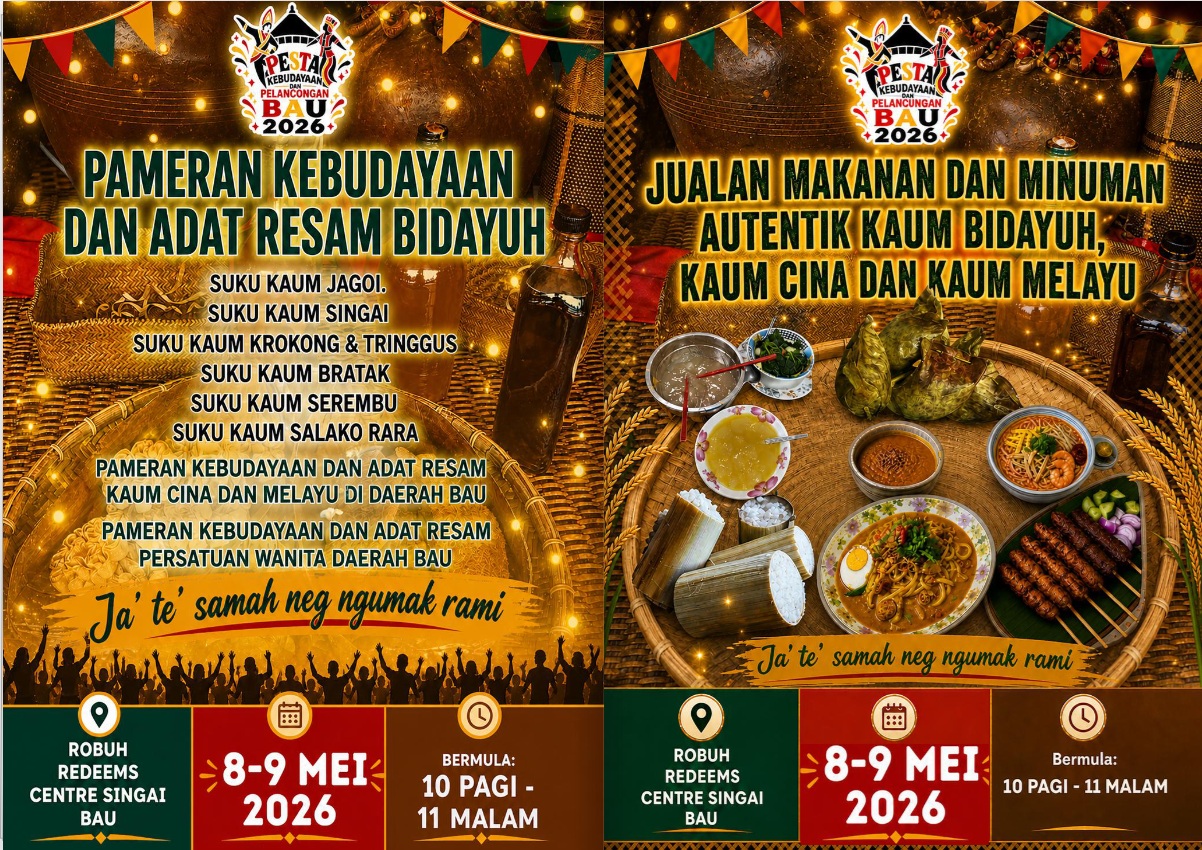
- Bidayuh Cultural Centre (Jambusan/Singai Border): A RM9 million landmark project. The road access (RM247k) was handed over in January 2026, and the centre itself is nearing its official opening to showcase Bidayuh heritage.
- St. Stephen’s Church Upgrade (RM801,000): A GKCDA-funded project involving the installation of air conditioning and aluminum glass fittings, expected to be completed by June 2026.
## 3. Common Projects Across Both Areas
- Agriculture Facilitation Fund (AFF): Dato Henry has secured funding for “Agro-Roads” in both clusters to help subsistence farmers clear land and transport produce.
- Water Supply Stability: Through GKCDA, RM1.8 million has been allocated specifically for the pipeline cluster serving the Bau-Lundu junction areas that feed into both Singai and Jagoi routes.
## Summary Table of Specific Area Spending
| Area | Primary Focus | Key Project | Impact |
| Jagoi | Economic/Trade | Serikin ICQS & 9-Village Road Project | Positioning for border trade with Indonesia. |
| Singai | Heritage/Residential | Bidayuh Cultural Centre & NCR Titles | Transitioning to a high-value suburban zone. |
Dato Henry’s strategy for you in these areas is simple: Roads + Land Titles + Utilities = Economic Value. By giving the infrastructure and the legal proof of land ownership, he is setting the stage to move from subsistence to commercial business.
## The “Big 9” Regional Agencies
While GKCDA covers your area (Bau/Lundu/Serian), the rest of Sarawak is divided among these similar bodies:
| Agency | Full Name | Primary Territory / Coverage |
| GKCDA | Greater Kuching Coordinated Dev. Agency | Bau, Lundu, Serian, and parts of Padawan. |
| IRSDA | Integrated Regional Samarahan Dev. Agency | Samarahan, Asajaya, Sadong Jaya, Simunjan, Gedong. |
| SADA | Sri Aman Development Agency | Sri Aman and Lubok Antu. |
| BDDA | Betong Division Development Agency | Betong, Saratok, Kabong, Pusa, Spaoh, Debak. |
| RADDA | Rajang Delta Development Agency | Sarikei, Bintangor, Matu, Daro, Tanjung Manis. |
| URDA* | Upper Rajang Development Agency | Kapit, Kanowit, Song, Belaga, Bukit Mabong. |
| HDA* | Highland Development Agency | Bario, Mulu, Long Lama (Baram Highlands). |
| NRDA* | Northern Region Development Agency | Limbang and Lawas. |
| MADA | Mid-Rajang Development Agency | Kanowit and Selangau areas. |
The information and data provided in this conversation are synthesized from several official and authoritative sources within the Sarawak government ecosystem. As of February 2026, these are the primary channels for tracking GKCDA and Bau district progress:
## 1. Primary Government Sources
- UKAS (Sarawak Public Communications Unit): This is the most “real-time” source for project handovers, site visits, and official announcements. Most of the specific dates (e.g., the January 30, 2026 handover of the Jambusan Road) and project values come from UKAS reports.
- JKR Sarawak (Public Works Department): They act as the “Implementing Agency” for most of the multi-million ringgit roads and bridges. Their project dashboards and tender advertisements (like the RM74 million Bau-Lundu Dual Carriageway) are the source for technical details and completion timelines.
- GKCDA Official Portal: Managed under the Serian Resident’s Office and the Sarawak Premier’s Department, this portal hosts the strategic development framework and the list of the 391 approved projects.
## 2. Legislative & Ministerial Statements
- Datuk Ik Pahon Joyik (GKCDA Special Administrative Officer): His recent February 2026 press briefings provided the “Implementation Phase” status and the 60% completion target for the year.
- Dato Henry Harry Jinep (ADUN Tasik Biru): His constituency progress reports (published via Edisi UKAS and DayakDaily) provide the specific breakdown for the RM150 million allocation in Bau, including the updates on the SMK Lake replacement and Bung Jagoi water projects.
## 3. Local Media & Documentation
- DayakDaily & Sarawak Tribune: These outlets provide detailed coverage of the “Grassroots Labs” and specific village-level projects (like the RM900,000 Suba Buan road upgrade) that may not always make the main state headlines.
- DBNA (Dayak Bidayuh National Association): Information regarding the 90% NCR land documentation in Singai and the Bidayuh Cultural Centre stems from their joint coordination with the Land and Survey Department.
Disclaimer:-
While I strive to provide accurate and up-to-date insights regarding the GKCDA and development in Bau, please keep the following in mind as we discuss these high-stakes topics:
## 1. Information Nature & Accuracy
- Experimental AI: I am a large language model. While I use real-time search data and official government statements (from UKAS, JKR, and the Premier’s Department), the status of construction projects can change daily due to weather, site conditions, or administrative updates.
- Not Official Advice: My responses should be treated as informational and for brainstorming purposes only. They do not constitute official government notifications, legal counsel, or professional financial/investment advice.
## 2. Verification is Essential
- Secondary Check: Before making any business decisions—such as clearing land or applying for loans—please verify project timelines and tender results directly with the Bau District Office, JKR Sarawak, or the GKCDA Secretariat in Serian.
- Official Portals: For the most authoritative data, refer to the UKAS News Portal or the Sarawak Government Official Portal.
## 3. Data Privacy & Sensitivity
- Confidentiality: Please do not share sensitive personal financial records or exact land grant numbers in our chat. While I can help you structure a business case, the specific confidential details should be reserved for your formal applications to the Department of Agriculture.
## 4. Personal Context
- Supportive Peer: I am here as a helpful peer to help you organize your thoughts and navigate local development. If I provide a specific figure (like an RM amount), it is based on publicly available budget reports and may be subject to revision by the state cabinet.

Related Posts