What Is an Order Block? A Simple Guide for Everyday Traders
If you’ve spent any time in trading communities, you’ve probably heard the term Order Block thrown around. It sounds technical and intimidating — but it doesn’t have to be. Let me break it down in plain English, the way I wish someone had explained it to me when I first started.
What Is an Order Block?
Think of an Order Block as a price zone where the big players — banks, hedge funds, and institutions — placed massive buy or sell orders.
More specifically, it’s the last candle moving in the opposite direction before price makes a strong, aggressive move. There are two types:
- Bullish Order Block — The last red (down) candle before price shoots strongly upward
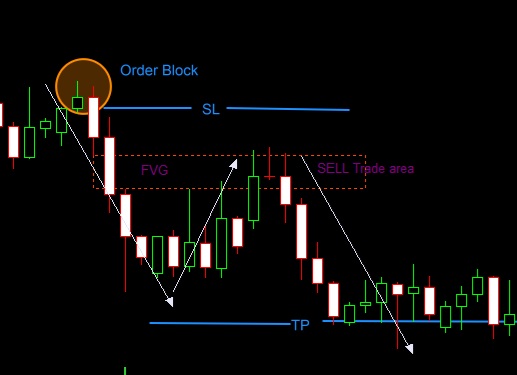
- Bearish Order Block — The last green (up) candle before price drops sharply downward
That one candle? That’s where the institutions left their fingerprints.
When Does an Order Block Form?
Order Blocks don’t just pop up randomly. They tend to appear at very specific moments on the chart:
- At key market highs and lows (swing points where price has reversed before)
- Around major session opens — particularly the London and New York sessions
- After stop-losses have been building up in one area, creating a pool of liquidity
When you see price suddenly flip hard at one of these spots, there’s a good chance an Order Block just formed.
Why Do Order Blocks Exist? The Real Reason
Here’s the part most people don’t talk about — the why behind all of this.
Big institutions have a problem you and I don’t have. They’re trading billions of dollars, not thousands. If they tried to buy or sell everything at once, the market would move against them immediately before their order even filled. That’s called slippage, and it’s costly at scale.
So instead, they get clever:
- They push price into areas where retail traders have their stop-losses sitting
- This triggers a flood of buy or sell orders from regular traders hitting their stops
- The institutions use that surge of liquidity to quietly fill their massive positions
It’s not random. It’s deliberate. And once you see it, you can’t unsee it.
How Does an Order Block Play Out? Step by Step
Here’s the actual sequence of events, simplified:
Step 1 — The Trap
Price moves into a previous high or low, triggering stop-loss orders from retail traders. This is called a liquidity sweep.
Step 2 — The Influx
Institutions flood in with opposite orders, absorbing all that retail liquidity to fill their positions.
Step 3 — The Displacement
All that institutional volume causes price to move aggressively in the new direction. This rapid move often leaves behind what’s called a Fair Value Gap (FVG) — a price area that was skipped over too quickly.
Step 4 — The Retest (Mitigation)
Because institutions couldn’t fill 100% of their orders during that fast move, price often comes back to revisit the Order Block zone. This is your trading opportunity — the retest before price continues in the main direction.
Where Do Order Blocks Show Up on the Chart?
The good news? Order Blocks appear on every timeframe — from 1-minute charts all the way up to monthly charts.
The best places to look for them:
- Swing highs and swing lows — areas where price has clearly reversed before
- Premium zones (price is running high/expensive) and discount zones (price is running low/cheap)
- Next to Fair Value Gaps — unfilled price areas left behind from fast moves
Higher timeframe Order Blocks generally carry more weight. A weekly Order Block will matter more than a 5-minute one.
The Bottom Line
An Order Block is simply the market leaving you a clue about where the big money got involved. Once price returns to that zone, institutions are often still filling their remaining orders — and price tends to react strongly.
You’re not fighting the market. You’re following the institutions who actually move it.
Start identifying these zones on your chart, combine them with liquidity sweeps and Fair Value Gaps, and you’ll begin to see the market in a completely different way.
Trade Order Block – There are other ways to trade it, but one of them is shown in this image.