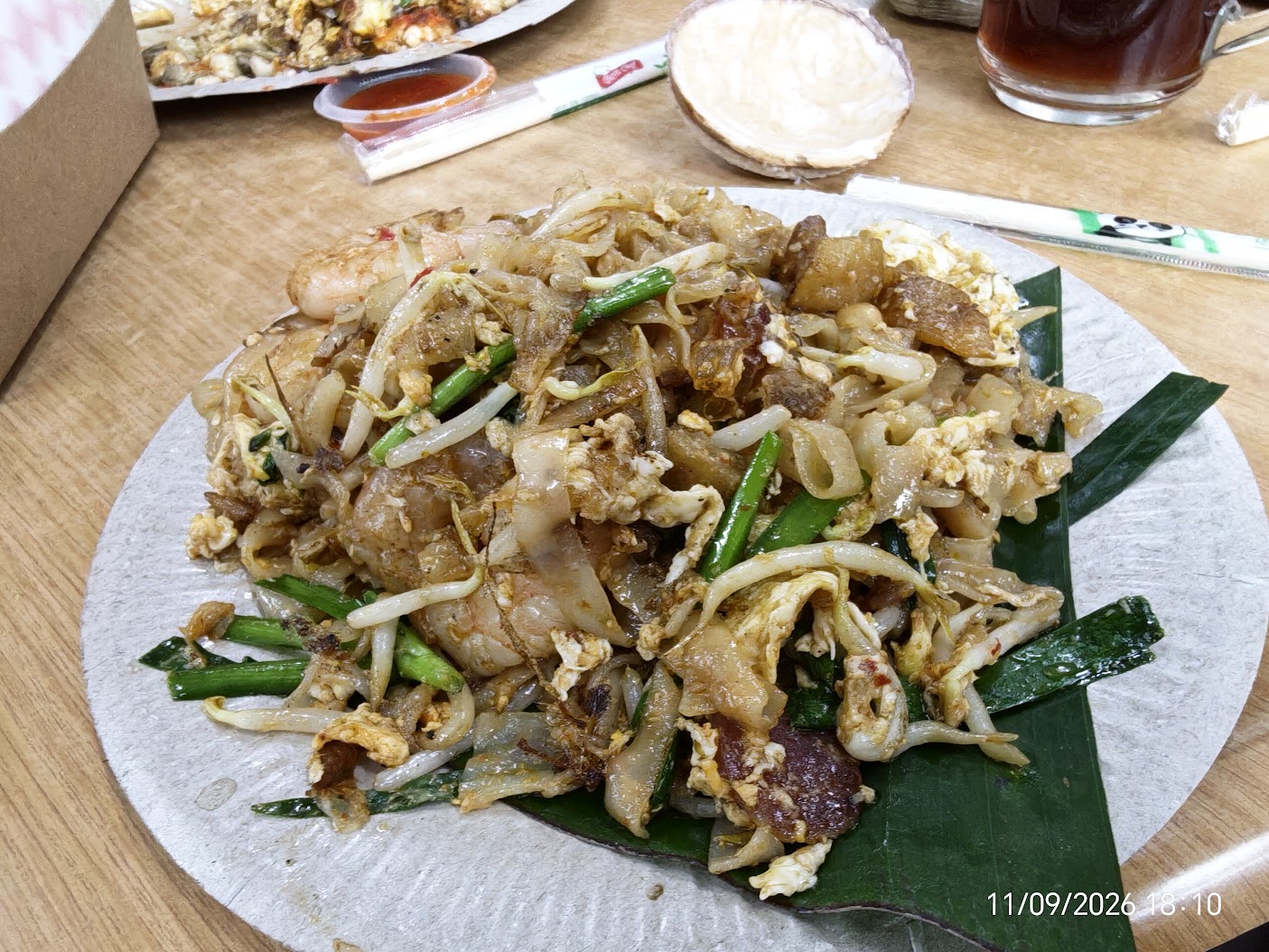
The author recounts observing a Char Kueh Tiaw vendor cooking over a charcoal fire in Penang, noting the constant queue of customers over several hours. Watching the cook’s practiced, rhythmic movements prompted reflection on unconventional measures of success, contrasting it with typical symbols like offices or wealth.
The piece argues that mastery, consistency, and years of disciplined practice—rather than shortcuts or quick wins—produce genuine success, exemplified by the vendor’s steady stream of customers. It concludes that true success can appear unglamorous, embodied by dedicated, repetitive craftsmanship rather than outward displays of achievement.
There are many things I remember from my recent trip to Penang.
KOMTAR, the old streets of George Town, the food, the crowds, the night atmosphere.
But one particular scene stayed in my mind.
It was a man standing over a charcoal fire, frying Char Kueh Tiaw.
Nothing particularly glamorous about it. Just an old wok, a charcoal stove, ingredients, a spatula and a man doing his job.
But after sitting there for several hours, I began to see it differently.
The queue never seemed to disappear
We had our dinner and then stayed around the area, having a few beers and enjoying the evening.
The Char Kueh Tiaw stall was still going.
And going.
And going.
There was a queue when we arrived.
There was still a queue an hour later.
Then another hour passed — and there was still a queue.
One customer received his plate, and another person stepped forward.
The assistant was busy taking orders while the cook concentrated on the wok.
What caught my attention was that his wok and his hands hardly seemed to stop moving.
He was not just cooking.
He was working.
Almost like a dance
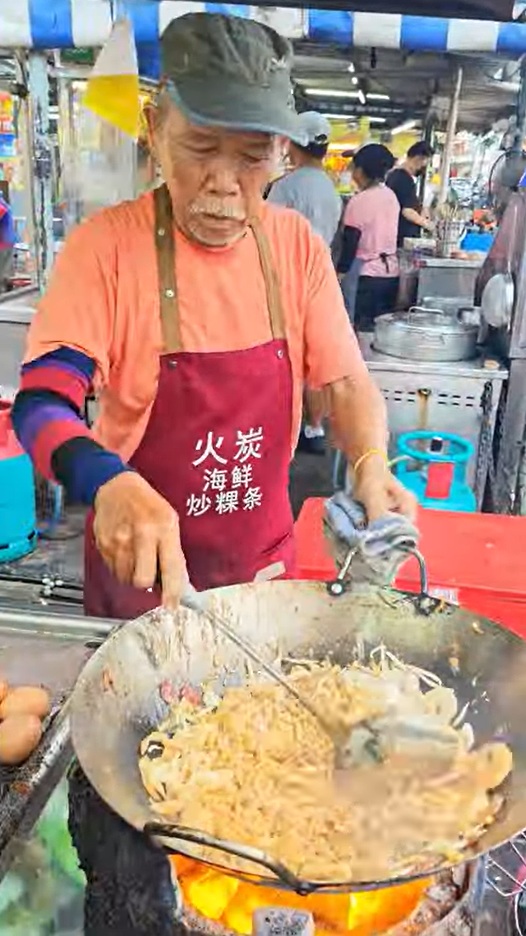
I managed to take a photograph of him while he was working.
When I looked at it later, I thought: This man is almost dancing with his wok.
His body moves with the rhythm of the cooking.
Lift.
Stir.
Scrape.
Turn.
Toss.
Add the ingredients.
Stir again.
Then another batch.
And another.
The charcoal fire underneath the wok was burning intensely, but he just kept going.
There was no drama about it.
No complaining.
No looking at the clock.
Just work.
Then I started thinking about success
We often have a strange idea of what success looks like.
We imagine success as a big office, an expensive car, a nice house, a business suit or a company with hundreds of employees.
But sitting there watching this man, I thought:
Maybe success can look like this too.
An experienced man standing beside a charcoal fire.
A wok that has probably been used thousands of times.
A skill developed over many years.
An assistant taking orders.
And a queue of customers that doesn’t seem to end.
He doesn’t have to tell anyone that his business is successful.
The queue tells the story for him.
RM15 a plate
From what I observed, the Char Kueh Tiaw was around RM15 a plate.
If the often-mentioned figure of around 300 plates in an evening is accurate, that would mean roughly:
300 plates × RM15 = RM4,500 in gross sales.
Of course, gross sales are not profit. There are ingredients, charcoal, wages, stall costs, utilities and many other expenses.
But that’s not really the point.
The point is that 300 plates means 300 customers choosing his food.
And you don’t get that kind of customer flow simply by putting up a sign saying “Famous Char Kueh Tiaw.”
You have to give people a reason to come back.
Years of doing the same thing
Perhaps the most impressive thing is that what looks exhausting to me is probably simply his normal working routine.
He has developed a rhythm.
He knows exactly when to move the wok.
He knows how much ingredient to put in.
He knows how to control the noodles.
He knows how the charcoal behaves.
He knows when the food is ready.
And he can do it again and again.
That’s what experience really means.
Not simply knowing how to do something.
Being able to do it consistently, under pressure, for hours.
There is no shortcut
That was the lesson I took away from watching him.
We hear a lot about success these days.
Work smarter.
Find a shortcut.
Use technology.
Build passive income.
Get rich quickly.
But sometimes the old formula still works:
Learn your craft.
Work hard.
Keep improving.
Serve your customers well.
Do it again tomorrow.
And then do it again the day after that.
Eventually, people notice.
And perhaps one day, you look up and realise that there is a queue outside your stall every evening.
The look of success
When I took this photograph, I was simply photographing a Char Kueh Tiaw cook.
Looking at it afterwards, I saw something else.
I saw a man who has mastered his craft.
I saw discipline.
I saw hard work.
And I saw something that many people overlook:
Success doesn’t always look impressive from the outside.
Sometimes it looks like an old man sweating beside a charcoal fire, moving his wok for hours while another customer waits for his plate.
His hands keep moving.
The wok keeps moving.
The customers keep coming.
And the charcoal keeps burning.
That, to me, is one of the real faces of success.